Monday, 27 June 2011

First Yahrtzeit of Rabbi Mordechai Tzemach ben Salman Eliyahu

Today - the 25th Sivan 5771 marks the first Yahrtzeit of the former Chief Rabbi of Israel - Rabbi Mordechai Eliyahu. The story below (a well known story about Rabbi Eliyahu) is taken from www.ascentofsafed.com. See below post for more info.

Only One Did Not Faint

One of Rabbi Mordechai Eliyahu’s early predecessors as Rishon L’Zion, Sephardic Chief Rabbi of Israel, was Rabbi Yitzchak Nissim, who had a special appreciation and admiration for the CHIDA (Rabbi Chaim-Yosef-David Azulai – see below). One of Rabbi Nissim’s friends was Dr. Shlomo Umberto Nachon, a native of Livorno (Leghorn), where the Chida lived the end of his life and was buried.

In the late 1950’s, Dr. Nachon learned that the Italian authorities wished to build a highway through the Jewish cemetery of Livorno. He quickly informed Chief Rabbi Nissim and, understanding the urgency of the situation, they decided it was time to move the Chida to Eretz Yisrael. Dr. Nachon made the arrangements with the authorities in Livorno, and in 1960 Rav Nissim, after much coaxing, commissioned the then 31-year-old Rabbi Mordechai Eliyahu, who was known to be intimately familiar with the Chida’s writings, to head a team of esteemed Sephardic rabbis (which included Rabbi Yisrael Abuhatzeira, the Baba Sali, and his brother the Baba Haki, Rabbi Yitzchak Abuhatzeira, chief rabbi in the city of Ramle, who was an expert in Jewish burials in his native Morocco) for the reinterring of the bones of the Chida in Jerusalem.
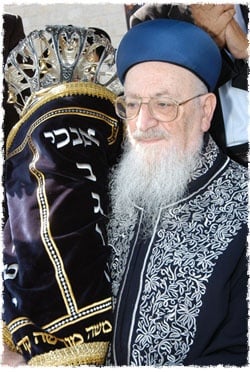
MordechaiEliyahu.jpg
Rabbi Eliyahu related that when he arrived at Lod Airport with the other rabbis, he met with the agency representative who had brought the bones of the Chidain a small wooden coffin. When the Rav saw it, he was appalled “What is this?” he asked. “The bones of the Chida are rolling around in a miniature coffin? How can such a thing be?”

He asked that a larger coffin be brought, so that the bones could be transferred to it for an honorable burial. Then he requested that the Baba Haki's driver go with his driver, and that they immerse in a mikva [ritual bath], and afterwards buy a Phillips screwdriver to open the coffin.
When they returned, Rabbi Mordechai Eliyahu made a large hole in the bottom of the new large coffin so that there would be no barrier between the bones and the soil upon burial, but temporarily closed the hole with a stopper. Then he opened the small coffin, and put his hand in to arrange the bones. But after a few moments he trembled and closed his eyes, and said he had no power to do it and asked pleadingly from the Chida that he himself should put his own bones in order.
Immediately a powerful, almost explosive sound was heard, the coffin began to shake, and a rattling sound -- made by the Chida 's remains striking the coffin's walls -- was heard. All of the other rabbis fainted on the spot. Rav Mordechai did not faint, explaining afterwards that this occurred because he was absorbed in themitzva.
It was incredible! The bones managed to re-arrange themselves bone by bone, until the entire body was in order -- real resurrection! --  in the merit of the holy master, the Chida!
“G-d will grant you special Providence, and bring my remains out of this place.” [Gen. 50:25]
“He said to me, ‘Can these bones live?’…As I prophesied, there was a roaring sound, and the bones came together and joined one another…. ‘I am going to open your graves; I will take you out of your graves, My People, and bring you to the Land of Israel.’” [Ezek. 37:3, 7, 12]
Thousands accompanied the funeral procession from the Jerusalem neighborhood of Sanhedria to the cemetery at Har HaMenuchos. At the burial, Rav Eliyahu described the events that had taken place as “Nisei nissim--absolute miracles.”
At a later date Rabbi Mordechai Eliyahu announced that whoever needs personal salvation can go to pray at the grave of the Chida (just like at other great holy sites –ed.).
It is no wonder that when Rabbi Mordechai Eliyahu passed on to his heavenly great reward fifty years later that he was buried near the Chida on Har HaMenuchos!
~~~~~~~~~~~~~~~~
Source: Adapted from //heichalhanegina.blogspot.com/2010/06/rav-mordechai-eliyahu-ztvkl-and-chida.html . There Yitz explains that his main source is the version of RME himself, with supplementary details supplied from other versions. He also considerately supplies links to other sources.
Connection: First yahrzeit of Rabbi Mordechai Eliyahu on 25 Sivan (Monday June 27).
Biographical notes: Rabbi Mordechai-  Tzemach (ben Suliman)   Eliyahu (1929- 25 Sivan 2010) , the former Chief Sephardic Rabbi of Israel, was born in Iraq. A noted sage in all areas of Torah study, as well as a significant kabbalist, he was considered to be one of the leading authorities on Jewish law in Israel. His son, Rabbi Shmuel Eliyahu, is currently the Chief Sephardic Rabbi of Tsfat.
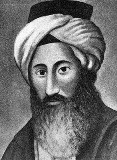
s708chida.jpg
Rabbi Chaim-Yosef-David Azulai (circa 5484-5566; 1724-1806), better known as the "CHIDA," which are the initials of his name, is a highly respected Halachist, Kabbalist, historian and bibliographer. Born in Jerusalem, his teachers included Rav Shalom Sharabi [the Rashash], and Rav Chaim ben-Atar (the Ohr HaChaim). Eventually he wrote and published 71 works! His Shem HaGedolim" is one of the most important source books of Jewish literature and history. Several times he traveled abroad for periods of over five years each, usually as an emissary of the communities of the Holy Land, and once to serve as the Rav of Cairo. He lived the last third of his life in Livorno (Leghorn), Italy, where he wrote most of his major works and where he passed away at age 82 and was buried.

Sunday, 10 April 2011

Pesach - A Time to Give. Four Cups of Milk! (Video Clip of the Lubavitcher Rebbe Included)


One of the Mitzvot preceding Pesach is the Mitzvah of "Kimcha DePischa" - or "Pesach Flour." The Mitzvah includes not only the giving of charity for the sake of flour - so that the poor can have Matzah on Pesach, but also the much needed charity to allow others in need to be able to celebrate the festival with joy. Without life's most basic necessities such as food, clothing and shelter, most individuals find it difficult to celebrate a festival like Pesach with joy (or to celebrate any part of life for that matter!) 

We offer you the opportunity to enjoy a video clip of the Lubavitcher Rebbe speaking about the great value of giving at this time of year, and then the additional opportunity to make an actual difference in the lives of some families living in Israel in actual need of food, clothing and other - to make their Pesach one filled with joy.

We hope you'll be a part of it - helping another to feel the true freedom that Pesach gives each of us - and in return that you too should be blessed with a Pesach that brings you the freedom you need in all of your own life's trials.

You can donate by simply clicking on the donate button below, or alternatively by visiting the "Bayit Chadash - Wedding Project" and learning more about our assisting newly married couples to be able to set up their own homes together without the additional crisis of having to deal with financial worries at the very start of their marriage. Should you wish to find our more, all contact information is available on those pages. Remember, though the Bayit Chadash project is about helping couples to marry - this also includes setting up their home - and giving them the opportunity to pay for their most basic expenses - such as the Pesach Seder and more - as they build their Bayit Ne'eman Be'Yisrael.

Enjoy the video!


FOUR CUPS OF MILK?!


One of the Mitzvot at the Seder is to drink four cups of wine. It happened one eve of Pesach, that Rabbi Chaim of Brisk heard a knocking at his door. He opened the door to find a poor man who had a Halachic question to ask of the great rabbi. "Rabbi," said the man, "Can one fulfill one's obligation for the four cups - by drinking four cups of milk?" Rabbi Chaim thought for a few moments... He then turned to his wife and asked her for five rubles which he immediately gave to the poor man and wished him a happy Pesach!

After leaving, the rabbi's wife asked him why he had given the poor man such a large sum of money. In fact, he had only wanted to know if he could fulfill his obligation by drinking four cups of milk! In any case, even one ruble would have sufficed for providing the man with wine throughout the entire Pesach holiday! Rabbi Chaim replied, "Since the man is asking about fulfilling his obligation on wine, he had hinted to two things. The first was the fact that he could not afford the wine. The second - which required a little more concern and thought - was that he had asked about fulfilling his obligation on milk. Surely - if he had asked about milk, he also lacked the money to purchase meat (which would have been forbidden to eat together with the milk!)" Rabbi Chaim had heard a question that was not being asked. He had heard the other asking for something needed - but for the additional embarrassment of asking - was avoided! 

We so often see others asking for assistance etc. and even in their asking, they seem to require just a little something basic. To such a degree that we feel we can even discharge our obligation to give by giving just that small amount necessary.

But it takes a sensitive soul to hear the true words of the one asking for "flour for Pesach." Surely, if they are lacking the means to own flour, they may also lack the means to own beautiful new garments for the festival. They may even be in need of a fridge to store their food. They may lack a stove upon which to cook. And who knows... they may even lack their own home to eat in...

Kimcha D'Pischa - teaches us the true meaning of sensitivity. When we give, we let the other know that the money is there to help them buy Matzot. But what we really mean to say is - "Here... take this wealth and see to it that you have meat too. See to it that you and your family have brand new clothing... See to it to buy that fridge that you've never been able to afford. See to it to purchase a stove so you can have hot food! See to it that you own a home so that you can eat your meal inside of it - like a king and queen!"

Pesach is the time for our freedom. A time to turn to each other and love the other truly as we would love ourselves - desiring for other the same freedom in life as we strive for ourselves.


Wednesday, 30 March 2011

One Cannot be Equally Devoted to Both! A Lesson of Value

Imagine for a moment - you actually have some free money available to do some good with. The Mitzvah of charity stares you in the face, and within moments (every day!) you're confronted with a variety of opportunities of where to give the extra Tzedakah. A man looking disheveled knocks on your door. He needs help! An orphan - never having had a father - needs to build her home. She too needs help. Let's not forget the whales who are battling in the ocean on a daily basis - because there are many there out at sea, in need of our urgent assistance! To which cause do we give our hard earned money?! 

It sounds like an easy question. There are so many causes that using our money where we believe it will do the most good must be the right answer - every time! But are we always as honest in evaluating our value system as we ought to be?! After all, what do we do when we can choose between purchasing an attractive new car (beyond the norm of necessity) and an orphan approaches us *then* with his/her needs in life?! Or what about when it comes to purchasing the latest technological gadget available today (with a new one coming out tomorrow!) and a family sunken in debt just trying to make ends meet. What do we do then?!

Or how do we choose to spend our fortunes when it comes to a choice between paying another honestly without the need for bargaining, trickery or simply not paying - and instead using the money for a new pair of Tzizit, new Tefillin, or the largest most beautiful Mezuzas available?! Would it really be so terrible to focus (just this once!) on *my* needs and let others take care of themselves (after all they too should work for their own money!)

The story below is an amazing one and brings out the truth that so many of us face every single day of our lives. Are we prepared to read it with honesty and weigh out our own value system of where we choose to spend the money which G-d has blessed us with?! Or are we still caught in the trap of "My strength and the power of my own hands" - has brought me all my wealth?!

The story below is taken from "Chiku Mamtakim" - stories about Rabbi Shlomo Zalman Auerbach and I found it on today's "Stories to Share" - a beautiful one page summary of the Amud HaYomi of Mishna Berurah. It seems that only with a regular study schedule of Jewish law can one begin to learn the truth of what it really means to be a good person. It takes much work and effort, but the learning is necessary in order to know what we need to do in order to refine ourselves, to work off any selfishness that might exist within ourselves and transfer this into true Jewish giving.


Rav Shlomo Zalman Auerbach was once consulted by a man  who claimed that he could purchase the very same Shas from  which the Vilna Gaon himself had learned.  “It even has the  tallow marks from the Gaon’s very own candle,” the man said blissfully. “I can pick it up for a mere thirty thousand shekels. Does the Rav think I should do so?” 

Thirty thousand shekels was a huge sum of money in those years. Nevertheless, this man felt it was worthwhile to pay this sum of money for a Shas that the Vilna Gaon had used. 

Rav Shlomo Zalman did not agree. “Instead of wasting so much money, why not take my Shas? It is also old and we can drip candle wax on it too, if that will make you happy!” 

Some time later Rav Shlomo Zalman called this man and told him about a widow who needed to marry off her children. “In order to pay all of her obligations she needs thirty thousand shekels...” 

When it was clear that the wealthy man would not be forthcoming with the money, Rav Shlomo Zalman commented, “Know that one is either excited about a collector’s item for  which he is willing to pay thirty thousand shekels, or he is moved by the pain of a widow who requires thirty thousand to  marry off her children. Apparently, one cannot be equally devoted to both!” 

Don't forget - a widow is not just a spider - she's a real person who has lost her husband. She might even need an extra dollar to maintain her usual lifestyle of life.

If you value the importance of a Jewish life more than the value of a book that was learned by a great man, do check in at Lovingkindness.co where you can find a number of beautiful projects such as helping couples to start their married life together and taking part in supporting Torah scholars (the one's who actually study those "old" books.)

LinkWithin

Related Posts with Thumbnails